Every agent has been there. A notification pops up. Someone just tapped WhatsApp from your website. You open the chat, and the message is vague: "Hi, I am interested in the property."
You have two options. Reply with something generic like "Which property were you looking at?" and watch the conversation stall. Or start with exactly what they were already thinking about and keep the momentum alive.
The difference is not charm. It is context.
Generic follow-up is where most leads die
Buyers do not ghost you because they found a better price. They ghost you because the follow-up felt like work. When an agent asks basic questions the buyer already answered through their behavior, the buyer checks out.
Think about it from their side. They spent ten minutes browsing your listings. They viewed three homes, searched for waterfront properties, and tapped WhatsApp from the one with the pool. Then your first message treats them like a blank slate.
That disconnect costs deals.
Context changes the entire conversation
When you know what a buyer actually did before reaching out, your first message becomes precise. Instead of "Thanks for your interest," you say "I see you were looking at the Austin home with the pool. Are you comparing it with the Scottsdale option too, or is the location the priority?"
The buyer feels understood. The conversation moves forward. And you save the three or four messages it usually takes to figure out what they actually want.
This is where speed matters most. The agent who replies with context within minutes often wins the lead before slower competitors even see the notification.
Your memory is not a system
Even the best agents forget details. You spoke to someone yesterday about a rental. Was it the Austin or the Denver property? Did they prefer two bedrooms or three? Did you promise to send the contract today or next week?
Relying on memory creates gaps. Gaps create delays. And in real estate, delays kill deals.
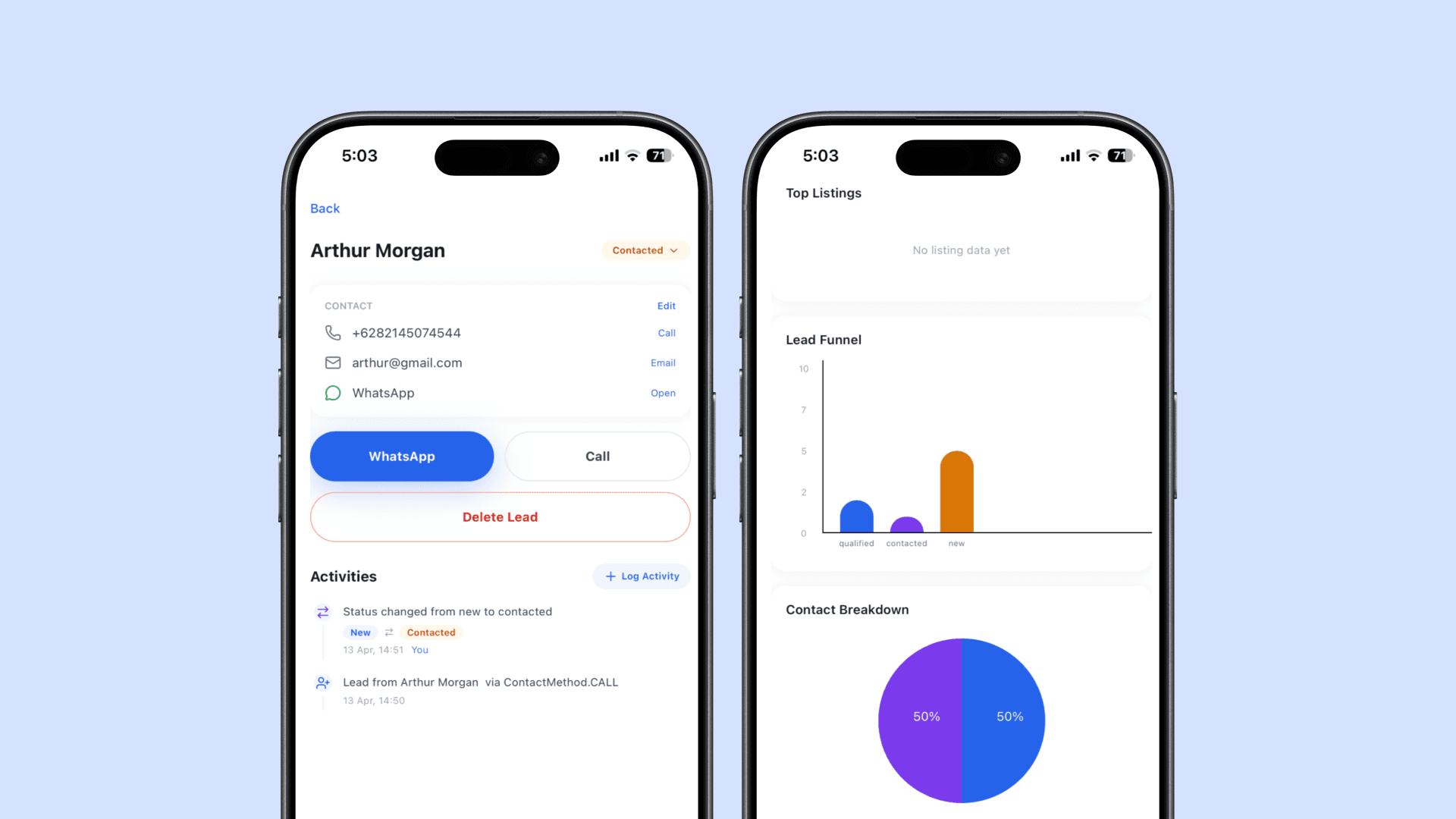
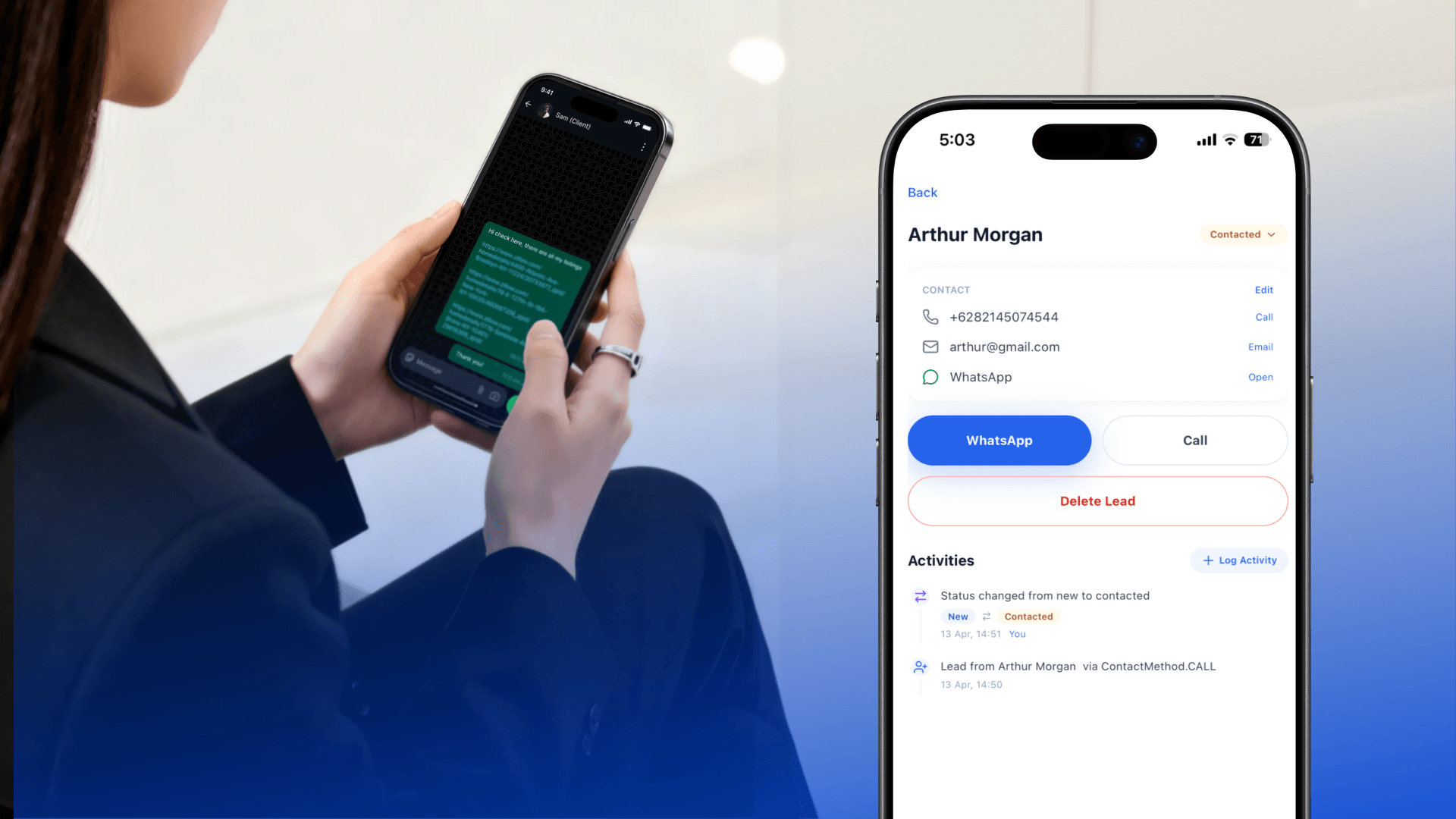
When your lead history includes the exact listings they viewed, the search terms they used, and the notes from your last conversation, you do not need to reconstruct anything. You just open the record and pick up where you left off.
Patterns reveal intent
One buyer message does not tell you much. But a buyer's journey does. If someone views five waterfront listings, searches for homes with pools, and taps WhatsApp from a new development page, you already know their priorities before you type a word.
That kind of pattern recognition changes how you qualify leads. You stop wasting time on buyers who are just browsing. You focus faster on the ones who are actively comparing options in a specific location and budget range.
Pipeline clarity beats pipeline volume
Most agents judge their marketing by how many enquiries they get. The better metric is how many enquiries they actually understand.
When every lead arrives with context, your pipeline becomes transparent. You know which listings create real interest, which ones attract only views, and where buyers tend to drop off. That clarity helps you decide what to promote, what to reprice, and where to spend your time.
The outcome is simple
Agents who follow up with context close faster. Not because they are better salespeople, but because they are better informed. They know what the buyer wants, they remember what was said last time, and they never start from zero.
In a market where the fastest, most relevant reply usually wins, that is the only advantage that matters.